
There’s an obvious mismatch between climate politics and climate realities – into the breach then with climate investment. By Dr Jez Weston
New Zealand is pulling back from effective climate policies and likely to fail to reach emissions targets. As we suspected last year, the current NZ Government is taking the retrograde step of subsidising liquefied natural gas imports at a cost of $2.7 billion over fifteen years, to be paid for by every household. This follows the roll-back of policies to support electric and cleaner vehicles, resulting in drastically lower market share for low-emissions cars sales this year.
Co-ordinated international responses are barely happening, one commenter at November’s COP 30 climate conference said that they’d “never seen so many people so underwhelmed by so little progress”.
So what does it all mean?
“Insured losses from natural catastrophes have doubled over the past decade.”
We can predict the most likely temperature change for an emissions path but climate models give a probability distribution of warming levels, not a single level. That probability is skewed with a long tail on the higher side, meaning there’s a chance of warming that’s slightly lower than average but a chance of warming that’s much higher than average.
These higher warming outcomes dominate the climate change risks. We are currently on an emissions pathway that gives us a most likely outcome of chance of 2.7°C.
What are the less likely but still possible outcomes? One estimate forecasts perhaps a 10% chance of 3.7°C and a 3% chance of 4.7°C. These levels of warming would be brutal. Planning to adapt to the average warming pathway leaves us vulnerable to those higher warming pathways.
When the tail is on a scorpion
The damage from warming that’s higher than the average expectation ramps up very rapidly as we exceed the ability of our infrastructure to cope with extreme weather, as we hit ecosystem tipping points and cascading failures, and as rates of climate change outpace our rates of adaptation, leaving us not adapting but responding.
The insurance industry is paying attention to long tail risk, understandably so, as insured losses from natural catastrophes have doubled over the past decade. The UK’s Institute and Faculty of Actuaries has been leading the work on this with their 2024 “Climate Scorpion – the sting is in the tail” and more recent “Parasol Lost: Recovery plan needed” reports. They consider that these risks are immediate and proximate. These losses will continue to double every ten to fifteen years raising the spectre of what they call “Planetary Insolvency” – of leaving the safe operating space for planet Earth.
This pull-back can be viewed as poor risk management. Asset managers are always trying to optimise – to balance present value against expected future value. However, when risks have fat tails, this kind of optimisation becomes unreliable. Low probability outcomes dominate welfare sothe more valid approach is to manage to reduce the probability of the events that cause outsize harms.
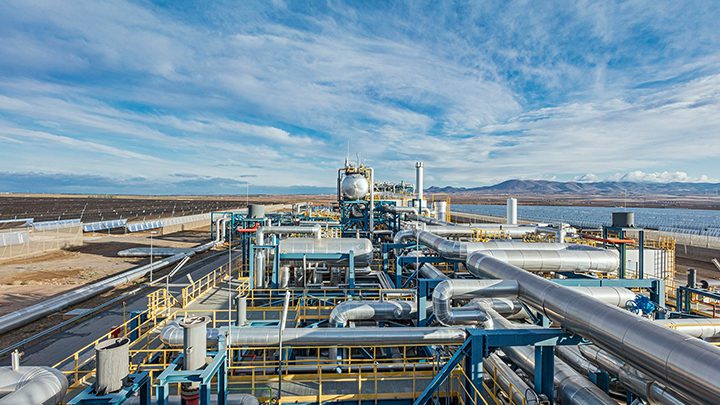
Stranded LNG assets
Economically, this pull-back locks some nations into costly sunset technologies exposed to uncertain world prices. The current Government’s commitment to LNG imports is actively tilting the playing-field in favour of old technologies, effectively a carbon subsidy of $400 per tonne of emissions. We will all end up paying for this subsidy through higher electricity prices than if the same resources had gone into renewable generation.
The stranded asset risk is real, with an import terminal needing investments in berthing, gas infrastructure and pipeline extensions, even if a large portion of the import equipment will sit on a floating storage and regasifier barge.
This is an example of a wider theme – the Government pushing higher-cost and higher-emissions asset choices and development patterns – more investment into long-lived fossil-fueled machines and infrastructure, more spread-out communities, more road transport, and longer travel distances.
“If you’re delivering in Auckland then you’re mostly sitting in traffic just wasting diesel, so an electric is going to pay off.”
Delay is not the same as direction
This theme is one of delay, rather than rejection. A systemic transition looks ever-more distant but it’s clear in aggregate the direction of travel. This context creates a changed set of success factors for climate technologies and start-ups. Many of the technology changes that we’re hoping to see will happen anyway due to the fundamental cost advantages of newer, cleaner, more efficient technologies.
Governments can act to tilt the playing field in favour or against simplistic market outcomes. Still, renewable generation and electric transportation will happen anyway as their economics are so favourable. These advantages can outweigh the policies being put in place to hinder them – as a truck driver recently said to me, “if you’re delivering in Auckland then you’re mostly sitting in traffic just wasting diesel, so an electric is going to pay off”.
Businesses should be investing in assets with the lowest Total Cost of Ownership (TCO). As a nation, we’re not, but businesses should. Fossil fuel technologies are often high opex due to fuel costs, whereas electrotech is low opex, making capital costs and depreciation more important.
What drives depreciation as technologies change? Right now, electric vehicles depreciate rapidly as the technology advances. As EV technology matures, this will become less of a factor. The lower energy and servicing costs greatly favour EVs. Over the life of those vehicles, EVs have a much lower TCO.
For sectors where the lower-emissions technologies don’t have such obvious advantages, it’s a matter of finding customers who value the characteristics that they do have. Those customers don’t need to be in New Zealand or similarly lagging markets. Regions with, for example, strong carbon pricing, are large enough to create opportunities for us.
Europe’s Carbon Border Adjustment Mechanism provides sufficiently high penalties on high-emissions steel, cement, and ammonia, that we’re expecting large shifts in where Europe buys those products from.
We can look for aligned drivers – where other factors drive technologies that benefit the climate. Energy security is a priority for many nations right now. The securest power is domestic and free from dependence upon imports of fossil fuels, giving renewables another feather in their cap.
Where lower-emissions technologies are held back by systemic constraints that can only be addressed at government level, then it’s inevitable that progress is going to be slowed. For example, the electrification of industrial heat will be retarded by the Government’s LNG plans. However, those constraints are increasingly obvious and increasingly criticised, so they will not last. We can expect and plan to be ready for when they are lifted.
Climate techstart-ups work to a timeline that’s longer than the three year terms of government, so being ready for more supportive policies is a strategy that should start now. So we’re going to keep looking for and supporting the opportunities that lead to and create effective pathways forward.
Dr Jez Weston is a partner in Climate VC Fund. Email him at jez@2040ventures.com