What they do.
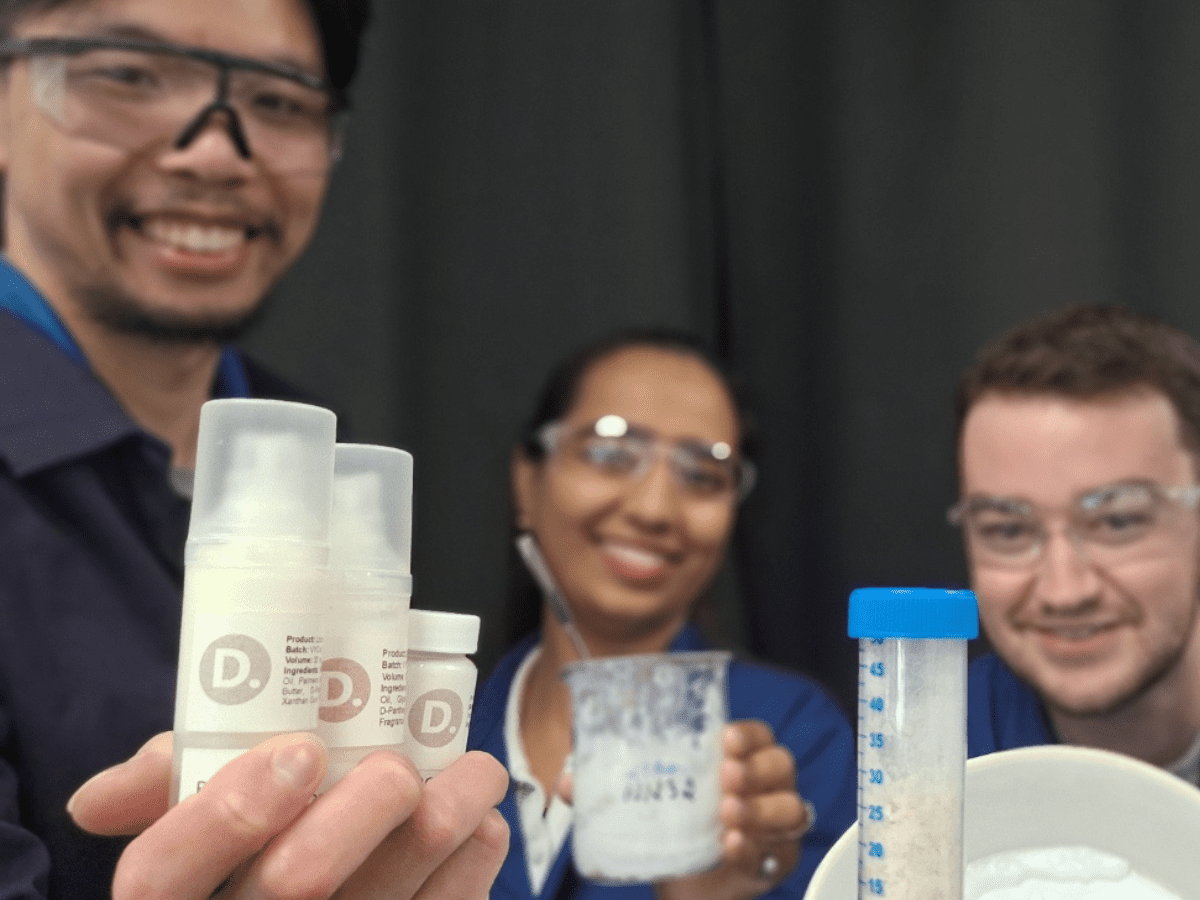
Dot Ingredients produces wood-based alternatives to petrochemical and palm-oil-derived ingredients used in everyday consumer products. The first commercial focus is surfactants, the surface-active ingredients that make soaps, detergents, cosmetics, and food emulsifiers work. Dot's process uses sustainably sourced wood feedstock to produce functional surfactants that match the performance of conventional alternatives.
The technology is platform-based. The same process can produce a range of ingredient categories from a single feedstock with adjusted process conditions.
Why it matters.
The global surfactants market is roughly $50 billion. The dominant inputs are petrochemical derivatives and palm oil. Both carry environmental costs: petrochemicals on emissions, palm oil on deforestation and biodiversity. Brand owners face increasing pressure from consumers and regulators to transition to lower-impact alternatives, but supply at commercial scale is limited.
A wood-based, performance-equivalent alternative changes the supply side of that equation. Brand owners gain a credible substitute that delivers the same functionality at competitive cost. The environmental case is structural to the supply chain, not a marketing claim.
Where they are now.
- Process development at pilot scale.
- Engaging brand-owner customers across personal care, household cleaning, and food categories.
- Capital deployment supports pilot-to-commercial scale-up, customer trials, and process patent work.
The CVCF investment.
Climate Fund 1 backed Dot Ingredients at early-stage. The thesis: large-volume ingredient categories with structural environmental cost will be displaced by sustainably sourced alternatives once supply and performance match. Wood-based feedstock at functional parity meets both bars.
Dot Ingredients passed the Climate Impact Committee's IRIS+ review. Each tonne of wood-derived surfactant produced displaces a tonne of petrochemical or palm-derived equivalent, with measurable impact on feedstock-related emissions and land use.