What they do.
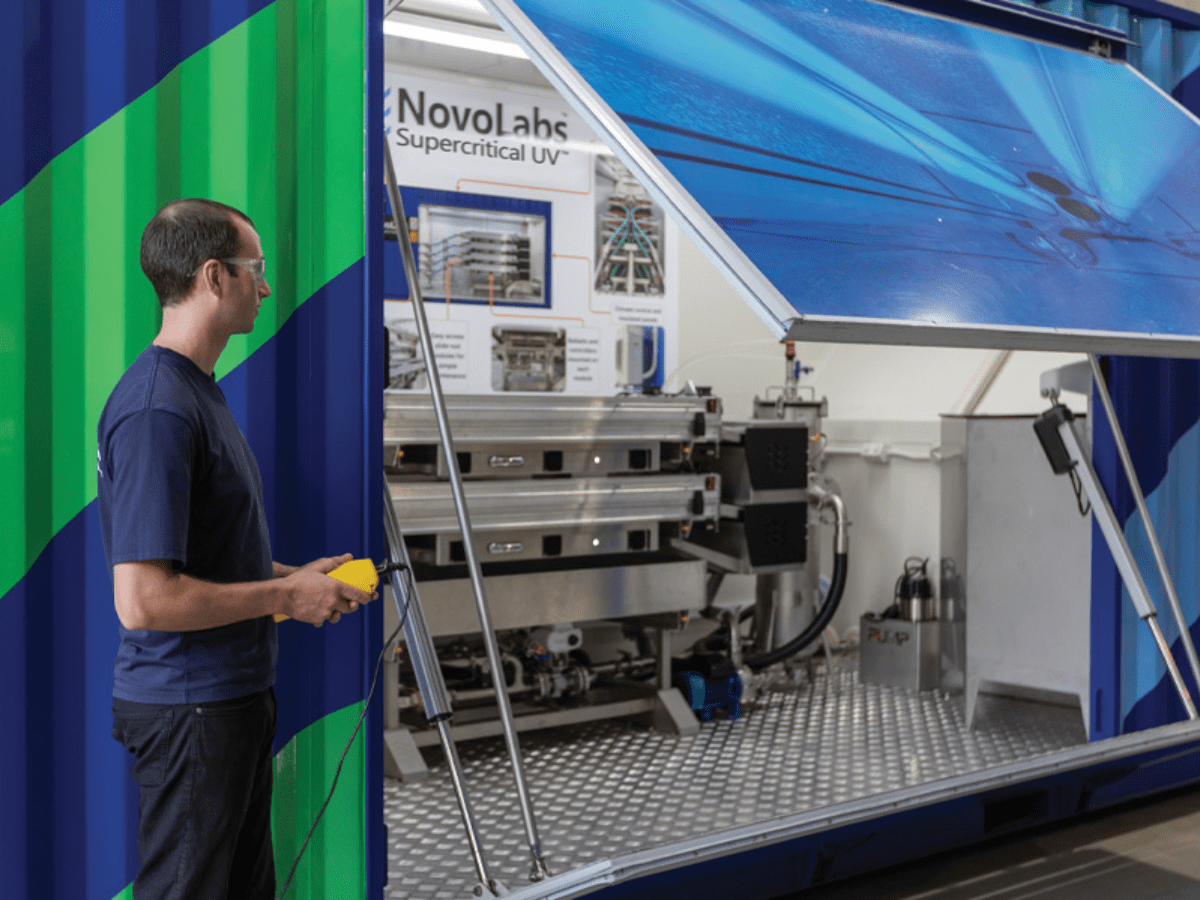
NovoLabs builds a world-first Supercritical UV Disinfection System for industrial water. The system treats wastewater streams that conventional UV cannot reach. Traditional UV needs clear water to disinfect; below about 30% UV transmittance, conventional systems lose effectiveness. NovoLabs' supercritical approach works on water with UV transmittance below 1%, including dairy effluent, food-processing wastewater, and other dense industrial streams.
The technology is delivered in containerised modular units that integrate with existing plant infrastructure. Each unit can process commercial volumes without chemicals, without thermal energy, and without producing disinfection by-products.
Why it matters.
Industrial wastewater is the most awkward water-treatment challenge globally. The food, beverage, and pharmaceutical industries collectively produce vast volumes of dense effluent that current technologies treat with chemicals or thermal processes. Both options carry cost, energy, and chemical-waste penalties. Chemical disinfection also adds residues that downstream treatment must remove.
Cheap, low-energy disinfection that works on dense effluent unlocks compliance and reuse. Treated water can be discharged safely, recycled within the plant, or returned to the environment without chemical residues. The commercial case is straightforward; the environmental impact follows the commercial deployment.
Where they are now.
- NZ Hi-Tech Awards 2024, Most Awarded Hi-Tech Company.
- Climate Fund 2 led a follow-on investment in 2026, doubling down on Climate Fund 1's original position.
- Commercial pilots underway with industrial water-treatment customers across Australasia.
- Capital deployment supports module manufacturing capacity, customer engineering, and the next commercial rollout phase.
The CVCF investment.
Climate Fund 1 first invested in NovoLabs when the company was validating the supercritical UV approach. The Climate Fund 2 follow-on backed the move from validation to commercial rollout. The thesis: low-energy, chemical-free water treatment is a structural improvement in industrial water economics, and the company that wins on disinfection effectiveness wins on cost.
NovoLabs passed the Climate Impact Committee's IRIS+ review at both investments. Each cubic metre of effluent treated by a NovoLabs system displaces chemical or thermal disinfection elsewhere, with measurable downstream impact on water quality and embodied energy.