The ocean makes up 70% of the Earth’s surface, and absorbs 30% of carbon dioxide emissions while capturing 90% of excess heat generated by those emissions in the atmosphere. Yet we are largely blind to, and certainly don’t much talk about, how climate warming is affecting the ocean.
Aotearoa New Zealand has one of the world’s largest Exclusive Economic Zones, so has both huge potential and responsibility to lead restoration globally. We’d like to see investors and policy makers take a much deeper look at our ocean health, and the opportunities and threats on the horizon.
Eyes open underwater
Our understanding of climate change is heavily shaped by being a land-based species. Land-based impacts are obvious – crops damaged by drought, storms and landslides affecting towns and cities, wildfires burning forests and suburbs. Terrestrial species are in decline. We see rising sea levels, from the coast, but are blind to the basic reality that the ocean is the engine of our weather and that it is in decline.
In fact, climate warming is only one of a number of major forces affecting ocean health.
The climate crisis meets the biodiversity crisis in the ocean
Biodiversity is declining due to overfishing as well as climate change. Fish stocks are down worldwide. For example in Japan, where sea surface temperatures have recently been 5 degrees Celsius warmer than average, catches of salmon, squid, saury and sea urchins are down and prices are up. Closer to home, Fisheries NZ confirm that stocks of tarakihi are in a shocking state, with just 8 per cent of the unfished biomass remaining along the east coast of the North Island, and 29 per cent on the west coast. Biomass of less than 10 per cent means risk of stock collapse. Other species like snapper, crayfish and scallops are all under intense pressure from historic overfishing and spawning habitat destruction.
But that’s not all…
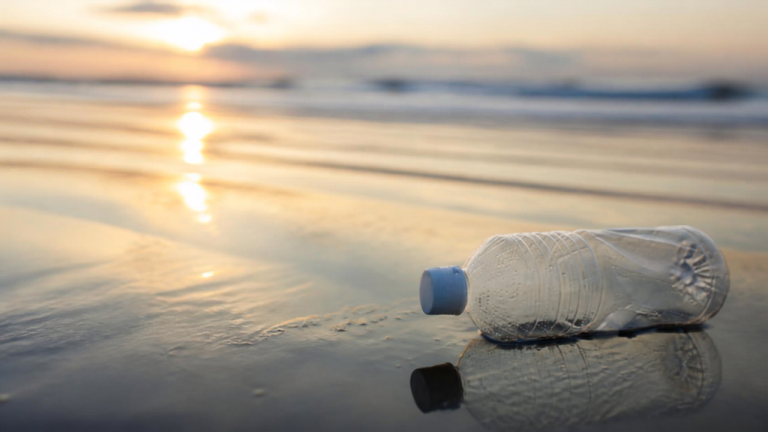
Ocean acidification from increased absorption of carbon dioxide from the atmosphere reduces the availability of the carbonates which marine species such as krill and shellfish depend on to build shells and skeletons. Invasive species (such as, in New Zealand, the long spined sea urchin, caulerpa seaweed and golden clams) are able to occupy new territory as temperatures warm. Plastic pollution entering the oceans every year is estimated to exceed one million metric tonnes.
These extensive, inter-related changes are huge in magnitude. For example:
- Almost the whole of the Mediterranean Sea from Spain to Turkey was recently 5 degrees Celsius warmer than average, damaging seaweeds and marine life; and
- A single algal bloom in South Australia has now lasted for almost 18 months, impacting millions of marine animals and over 400 species. The causes identified include nutrient-rich floodwaters, and a marine heatwave.
And it could certainly get worse. Potential major changes in oceanic currents have huge ramifications for the planet. The slowing of the “AMOC” current (Atlantic Meridional Overturning Circulation) due to climate warming could lead, paradoxically, to much colder temperatures in Europe and increased sea level rise along the US East Coast. But as distribution of fish species is linked to nutrient cycling, if the AMOC weakens, stocks of cold-water fish like Atlantic cod could decline too.
“Rest and invest”, a simple recipe for improved ocean health
The good news is oceanic ecosystems are resilient and capable of recovering quickly – much more so than the land, if we give it a rest from fishing. While climate response requires long-term efforts to decarbonise the economy, an end to destructive fishing practices in degraded areas can see a rapid recovery in marine life. This has been proven in marine protected areas in New Zealand such as Goat Island north of Auckland and at the world-renowned Poor Knights islands.
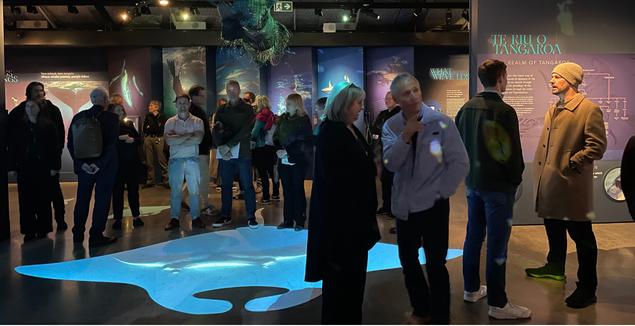
Recently I was pleased to speak at the “Business and the Ocean: Why Your Actions Matter” event at the NZ Maritime Museum. Facilitated by Rosalie Nelson of Live Ocean, the panel included Prof Rochelle Constantine, University of Auckland, ultra-marathon swimmer Jono Ridler, and Natasha McGowan from Mindful Money.
The stunning “Ngā Hūhua: Abundance” exhibition, curated by Kate Waterhouse provided an incredible starting point for the conversation. Kate summed the situation up neatly – the ocean needs us to give it a rest, and to invest in better ocean health. “Rest and invest” has a nice ring to it, doesn’t it?
Investing in solutions which help ocean health
Looking at the “invest” side of things, we are pleased to see that many portfolio companies in CVCF (1 and 2) have positive benefits for the oceans. These include:
- Cleanery – household cleaning with low plastic, and all natural & biodegradable ingredients;
- Dot Ingredients – clean surfactants, reducing micro-plastics reaching waterways and oceans;
- NovoLabs – removal of pathogens and excess nutrients from industrial and municipal waterways, without chemicals;
- Liquium – green ammonia as a potential shipping fuel,
- Mara Bio – alt proteins from dairy waste, reducing nutrient runoff into waterways; and
- Ocean Balance – marine carbon dioxide removal.
And all of our companies aim to reduce carbon dioxide emissions which will in turn reduce ocean acidification.
We can see through firms like these, and others, that economics and the environment are not in opposition to ne another. They’re not at opposite ends of a continuum, with a zero sum game between the two. When we look into new technologies which are cleaner for the atmosphere and the oceans, we find that they are also better products, and cheaper than fossil fuel alternatives. In short, they are great businesses which we’re proud to support at CVCF.
A fresh look at what can be done
Ocean health is integral to our survival as a species and what we do in New Zealand can make a difference. There are many things businesses, investors and households can do to help. Here are some examples:
- Check your KiwiSaver or fund for ocean health risks with Mindful Money’s fund checker tool. Change providers if you don’t like what you find;
- Partner with an environmental group with a focus on the ocean, such as Live Ocean Foundation (with a mission to scale up science, innovation and outreach for a healthy ocean) or for those in the Auckland area, the Sustainable Business Network’s Tāmaki Taiao Alliance (connecting Auckland businesses to community restoration projects on land and sea);
- Take practical actions to electrify your household, and to reduce plastics and pollution entering the ocean;
- Encourage politicians to act to protect the ocean, for example by increasing marine protection areas;
- And obviously, tell a friend about options to invest in a climate or ocean-aligned business in Aotearoa, like the CVCF.