A team of steel veterans and physicists is turning black sand into iron in 150 seconds, in a modular plant instead of a multi-billion-dollar blast furnace, and without coal. Cheaper iron that happens to also be very green.
Steel is one of the largest industries on earth, and it is in everything: the building you’re sitting in, the car you drove today, the wind turbine and the EV that the energy transition depends on. Yet the way its raw material gets made has barely changed in three centuries. Iron comes out of blast furnaces, which are multi-billion-dollar megaprojects that cook ore for eight hours or more and run on coal. The coal does two jobs: it heats the furnace, and it chemically strips the oxygen out of iron ore. That is also why steelmaking produces roughly 8% of global CO₂ emissions. The industry’s cost structure and its emissions problem have the same root.
CullBeck attacks that root. Its reactor, an electrically heated continuous fluidised bed developed over nearly a decade at the Paihau Robinson Research Institute at Victoria University of Wellington, uses hydrogen instead of coal and reduces ore in under 150 seconds instead of eight-plus hours. Those fast, low-energy reaction kinetics change the economics. The plant is compact and modular, built in 10-tonne-per-hour units and replicated as demand grows, a far lower-capex proposition than conventional ironmaking infrastructure. The feedstock is cheaper too: CullBeck’s process runs on low-cost titanomagnetite ore that existing systems can’t use at all. And the reactor’s only by-product is water, plus a high-value slag containing vanadium and titanium.
CEO and co-founder Martin Hacon puts it plainly: “This isn’t green iron. It is cheaper iron that happens to be very green.”
The sequencing in that sentence is deliberate. The emissions case does not depend on customers paying a premium; it rides along with the cost case.
The hydrogen pathway, honestly
Green hydrogen is not yet reliably available at scale, so CullBeck will initially run on grey hydrogen, made from natural gas. That still eliminates the direct CO₂ emissions from the reduction step, approximately halving overall emissions at a lifecycle cost per tonne comparable to today’s coal-based methods. As green hydrogen supply scales, the same reactor takes emissions to near zero. At commercial scale the demand is material: a single 10-tonne-per-hour reactor needs a 20MW electrolyser’s worth of hydrogen, which is exactly the kind of bankable demand New Zealand’s green hydrogen sector needs to grow into.
Why it starts in New Zealand
CullBeck’s reactor was designed for titanomagnetite, the iron-rich black sand on New Zealand’s West Coast beaches. Standard low-carbon ironmaking technologies can’t touch it: they need high-grade magnetite and expensive pelletisation, which makes ironsand effectively unusable in existing systems. CullBeck built for it from day one, making it the only known technology at this level of maturity capable of processing ironsand at scale.
That’s a much bigger prize than it first sounds. New Zealand’s onshore resources are substantial, with existing mines enough to supply decades of steel. Titanomagnetite deposits run right around the Pacific “ring of fire” (Japan, Indonesia, the Philippines and beyond), representing multi-billion-tonne, low-cost ore resources that current technology can’t unlock. And the vanadium and titanium in the slag are critical minerals that North American buyers are actively seeking as alternatives to supply from Russia and China.
The proof so far
The technology has been validated to Technology Readiness Level 5, meaning proven at laboratory scale with industry partners, on the back of almost ten years of reactor development and nearly $8 million of government research funding. CullBeck has completed a full IP transfer from Victoria University, and the researchers who invented the process are on the founding team.
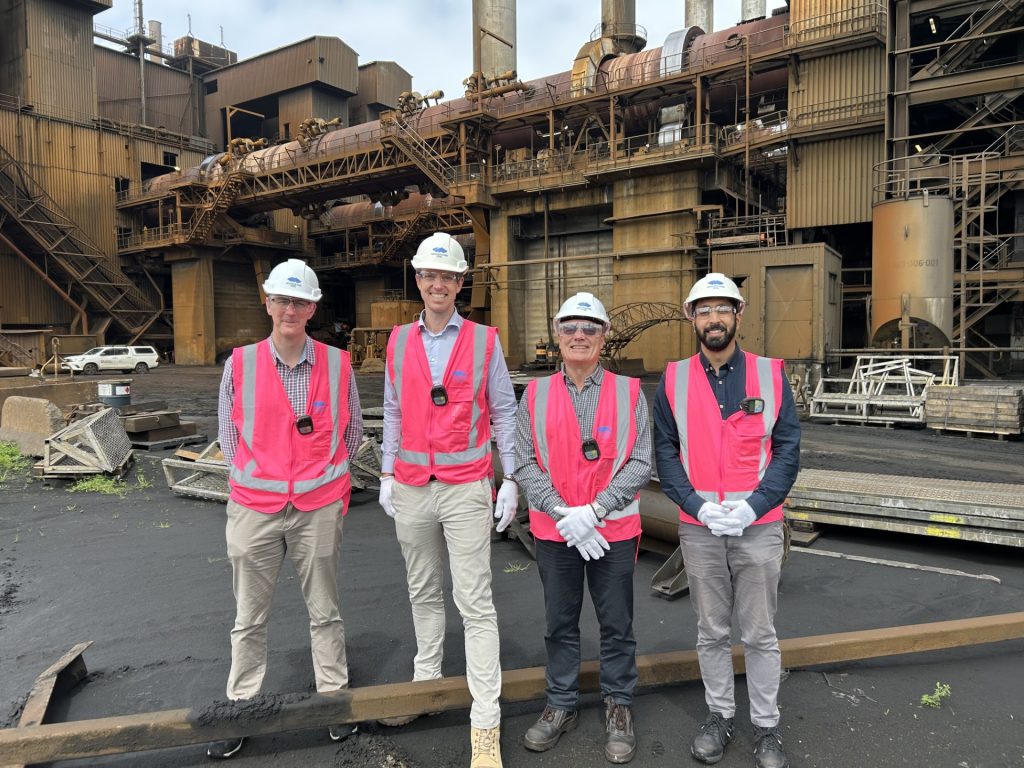
The commercial signals arrived early. NZ Steel has signed an MOU for CullBeck to build its 2.5-tonne-per-hour demonstration plant beside NZ Steel’s Glenbrook facility, the one place in the world already processing ironsand at scale. And before the demonstration plant has even broken ground, CullBeck has signed a foundational customer supply agreement with an Australian energy company.
The raise
CullBeck has secured $20 million in funding, anchored by an oversubscribed $15 million equity round. We believe it is the largest initial raise on record for a New Zealand deep-tech company, and the largest capital raise ever built around commercialising publicly funded New Zealand university research.
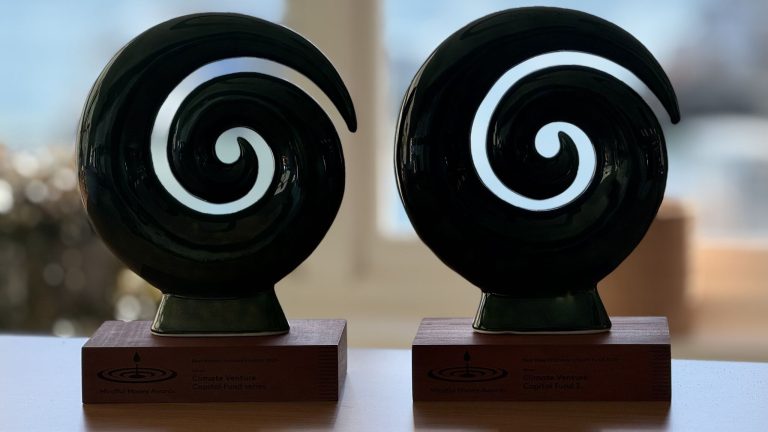
The round was kicked off by Outset Ventures. 2040 Ventures joined soon after and contributed over half of the equity round across Punakaiki Fund and Climate Fund 2, alongside Aspire (NZ Government), Motion Capital, K1W1 and Icehouse Ventures. Lance Wiggs has joined the CullBeck board alongside Outset’s Angus Blair.
The funding takes CullBeck through engineering design to construction of the Glenbrook demonstration plant, with ground-breaking targeted for early 2027 and 2.5 years of runway to reach demonstration milestones.
The team
Deep tech succeeds or fails on whether the people who invented the science can build the plant and can understand the needs of the industry. CullBeck’s founding team spans both ends. Martin Hacon, CEO, has spent over 40 years in steel operations and metallurgical processes and is recognised internationally in low emissions steelmaking. Chris Jansen, CFO, brings 15+ years across energy, chemicals and resources. Prof. Chris Bumby, Chief Scientist at the Robinson Research Institute, co-invented the core reactor process; Dr. Bavinesh Maisuria completed his doctoral research on the fluidised bed reactor itself; and Prof. Matt Watson of the University of Canterbury has scaled technology start-ups before.
“The steel industry has been exploring decarbonisation solutions for decades,” Hacon says. “We’ve decided to take the lead.”
Why Climate Fund 2 invested
Climate Fund 2 looks for companies where the climate impact is the commercial opportunity, not a constraint layered on top. CullBeck is as clean an expression of that thesis as we have seen. The addressable problem is 7–8% of global emissions. The wedge is economic: lower capex, cheaper feedstock, faster throughput, a licensing model that scales through replication rather than megaproject capital. Every unit deployed displaces coal-based ironmaking somewhere in the world, whether or not the customer cares about carbon.
Not to mention that our very own Dr Jez Weston has worked on the shop floor of steel foundries, has a PhD in metallurgy from Cambridge, and has been talking with the CullBeck team since the start of their work, years before their science became a company.
The demonstration plant at Glenbrook is the next critical milestone, and it is exactly what this capital is for. Deep tech asks more patience of investors than software does, which is precisely why our structures suit it. Punakaiki Fund’s patient evergreen model means we’re in it for the long term; Climate Fund 2 invests where solving the emissions problem and winning commercially are the same task.
There is also a longer thread here. Sir Paul Callaghan argued that New Zealand’s prosperity would come from turning science into globally significant companies. What that looks like in practice is a decade of publicly funded physics at a Wellington research institute becoming a company that could change how the world makes steel, funded by New Zealand investors and built at Glenbrook.
Lance Wiggs, founder of 2040 Ventures: “This is one of the highest ambition companies we have seen, with late stage technology that we believe will bring major changes to the steel industry, lowering costs, hugely impacting emissions and unlocking abundant, easily available iron ore resources here and offshore.”