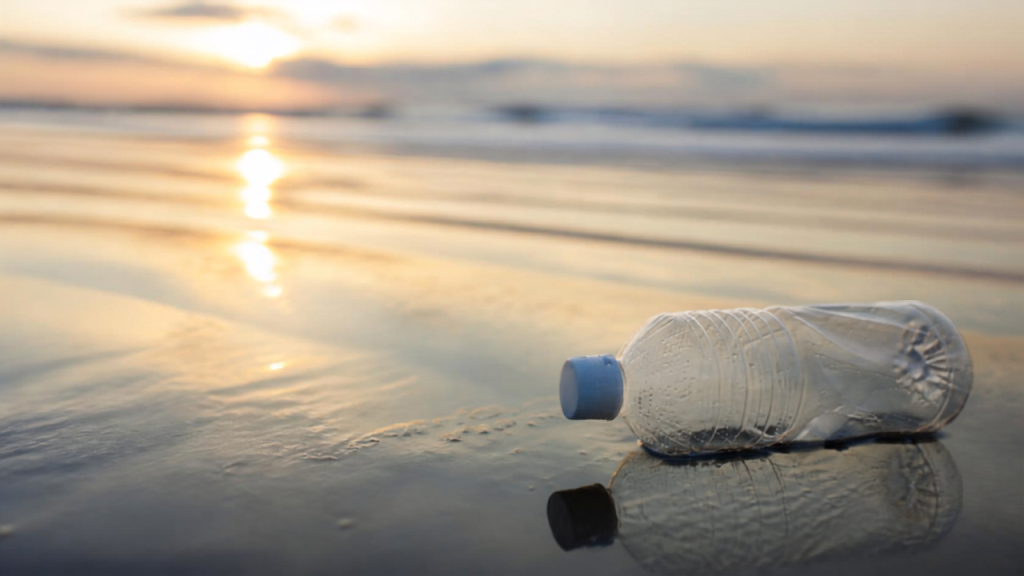
Every July, millions of people around the world take on the challenge of refusing single-use plastic for a month. This is laudable but personal actions like recycling post-consumer plastics are some of the least effective responses to climate change.
As a fund investing in climate solutions across Australasia, we think about plastic not as a habit to break but as a systems problem to solve. The plastic ending up in our oceans, soils, landfills, and our bodies isn’t there because people forgot their reusable bag, it’s there because we are committed to an extractive economy where the infrastructure for alternatives hasn’t kept up with the pace and scale of production. Plastic is cheap, durable, and a component of an economy that allows producers to disclaim responsibility for the whole of the lifecycle of their products.
That’s where investment comes in. Three of our portfolio companies are a useful illustration of how new technologies can deliver the drastic changes that we need.
Cleanery makes cleaning and personal care products that ship as a dry powder sachet and dissolve in water at home. There’s no bottle and by removing the bottle and not shipping water, Cleanery can fit the equivalent of 200,000 bottles in a single shipping container. Their estimate is a 97% reduction in plastic per product for cleaners that work better in independent tests than the mainstream products they’re replacing.
Co-founded in Auckland by Mark Sorensen and Ellie Brade, Cleanery’s origin story shows the deep roots of this problem. Sorensen has been thinking about packaging waste since he was 14 when he wrote a school essay on the subject. He got an A+ and like most of us had forgotten about it for two decades. What helped to resurface that core memory was a three-day tramp in Northland in 2017 where he found plastic on some of the most remote coastline in the world. The experience of beaches that should have been pristine is what eventually became an Auckland factory producing powder-format cleaners that allow us all to use far less plastic. The formulation is plant and mineral based, 100% natural and biodegradable. The tiny amount of plastic used for the sachet is recyclable.
CVCF led Cleanery’s $2 million seed round back in 2022, and the company now has a growing presence in the USA as well as Australia and New Zealand.
Ultimately, our extraction of fossil fuels for plastics will have to be replaced by truly circular processes with products sourced from sustainably-managed natural resources. We have invested in companies that are making good progress towards this.
For example, Dot Ingredients replaces surfactants made from fossil fuels with higher-performing alternatives created from wood pulp. Their process works well with the waste left over from timber manufacture and their products are so effective that they can replace much larger amounts of those sourced from petrochemicals.
Mara Bio is another portfolio company of interest. They take waste from food processing and use fungi to upgrade it into proteins and other high value bioactives. This creates more value from the same farm output and avoids the expensive costs of otherwise treating that waste for disposal.
We are yet to make an investment into bio-materials but we are following several projects closely.
We’re seventeen years into the initiative of Plastic Free July and there is evidence that its continuity is sustained. The consumer signal matters because it tells founders and investors that the demand for alternatives is real, even if the direct effect of those personal actions is small. So by all means cut your plastic consumption for the month, but don’t forget to consider more systemic solutions: interested investors can look into our Climate Fund 2, for example.
We’ll have more to say in our upcoming Impact Report, which looks at how we’re actually measuring the outcomes across the portfolio and showing that these alternatives are viable, scalable, and effective..